Lietuvių kalba
Lietuvių kalba English العربية Български বাংলা Čeština Dansk Deutsch Español فارسی Français Ελληνικά עִבְרִית हिन्दी Magyar Italiano 日本語 한국어 Latviešu valoda Bahasa Melayu ਪੰਜਾਬੀ Română Русский Slovenčina Српски језик Shqip Svenska Українська Türkçe اردو 香港中文 Norsk bokmål සිංහල தமிழ்
Pereiti prie turinio
Fragile X International logotipas
  • Apie trapųjį X
      Sąlyga
      • Trapus X sindromas
      • Stipriosios X sindromo pusės
      • Trapaus X sindromo diagnozavimas
      • Nemedikamentinis trapaus X sindromo gydymas
      Asmuo
      • Pagalba asmeniui, sergančiam trapiu X sindromu
      • Mergaitės, sergančios trapiosios X ligos sindromu
      • Seksualumas
      • Autonomija ir sutikimas
      šeima
      • Trapiosios X genetika
      • Su trapia X premutacija susijusios būklės 
      Daugiau informacijos
      • Judėjimo pertraukėlių veikla
      • DUK
      • Trapiosios X ligos klinikos pagal šalį
      • Ištekliai
  • Apie mus
    • Šeimų asociacijos pagal šalį
    • Šeimos istorijos
    • Tapkite nariu
    • Direktorių valdyba
    • Patarėjų taryba
  • Naujienos ir įvykiai
    • Naujienos ir atnaujinimai
    • Tarptautinė valiutų keitimo supratimo diena
    • 2025 m. "FraXI" dovanojimo diena
    • Tarptautinis trapiosios X ligos kongresas
    • Vasario 28-oji - retųjų ligų diena
  • Moksliniai tyrimai
    • Mūsų tyrimai
    • Mokslinių tyrimų naujienos
    • Mokslinių tyrimų galimybės
  • Palaikykite mus
    • Pateikite
    • Rėmėjas
    • Lėšų rinkimas
  • Susisiekite su
Paaukoti
Fragile X International logotipas
  • Apie trapųjį X
    • Trapus X sindromas
    • Stipriosios X sindromo pusės
    • Trapaus X sindromo diagnozavimas
    • Nemedikamentinis trapaus X sindromo gydymas
    • Pagalba asmeniui, sergančiam trapiu X sindromu
    • Mergaitės, sergančios trapiosios X ligos sindromu
    • Seksualumas
    • Autonomija ir sutikimas
    • Trapiosios X genetika
    • Su trapia X premutacija susijusios būklės 
    • Judėjimo pertraukėlių veikla
    • DUK
    • Trapiosios X ligos klinikos pagal šalį
    • Ištekliai
  • Apie mus
    • Šeimos asociacijos
    • Šeimos istorijos
    • Tapkite nariu
    • Direktorių valdyba
    • Patarėjų taryba
  • Naujienos ir įvykiai
    • Naujienos ir atnaujinimai
    • Tarptautinė valiutų keitimo supratimo diena
    • 2025 m. "FraXI" dovanojimo diena
    • Tarptautinis trapiosios X ligos kongresas
    • Vasario 28-oji - retųjų ligų diena
  • Moksliniai tyrimai
    • Mūsų tyrimai
    • Mokslinių tyrimų naujienos
    • Mokslinių tyrimų galimybės
  • Palaikykite mus
    • Pateikite
    • Rėmėjas
    • Lėšų rinkimas
  • Susisiekite su
  • New Link
  • [email protected]
  • RPM Bruxelles 0776.532.015
  • Researchers dive deep into relationships between anxiety and Intolerance of Uncertainty in Fragile X Syndrome In a study supported by the Baily Thomas Charitable Fund, Cerebra and the Cornelia de Lange Syndrome Foundation UK and Ireland, a group of researchers has contrasted the relationship between anxiety and Intolerance of Uncertainty in Fragile X Syndrome (FXS) and Cornelia de Lange Syndrome (CdLS). You can read the full article by Smith et al here, but if you want a shorter version about the FXS-specific findings, please keep reading this blog. Approximately 30% of males with FXS meet the diagnostic criteria for a separate diagnosis of co-occurring autism. However, the subtle differences in the presentation and severity of autistic characteristics in people with FXS and CdLS compared with those with nonsyndromic autism is under-studied. For example, boys with FXS are less likely to display differences in social reciprocity (e.g., social smiling) compared with autistic boys of the same age. This suggests that, despite similarities in characteristics, nuanced differences in autism presentation may make it challenging to differentiate autism from the inherent behavioural phenotype of rare genetic syndromes, yet it also affords the opportunity to examine the relationship between profiles of autistic characteristics and anxiety. What is the Intolerance of Uncertainty? The Intolerance of Uncertainty may explain the relationship between autism and anxiety in FXS. It is characterised by distress or difficulty functioning during uncertain or unpredictable situations, a strong preference for predictability, and cognitive or behavioural paralysis or inhibition. It has been identified as an important risk factor for the development and maintenance of anxiety in the general population and has been implicated as a critical factor underpinning anxiety. Understanding the relationship between the Intolerance of Uncertainty and anxiety in FXS is important for the development of tailored interventions to reduce anxiety in rare genetic syndromes associated with intellectual disability. Findings of the study The results from the study suggest that the relationship between autistic characteristics, anxiety and levels of Intolerance of Uncertainty (IU) differs for people with CdLS and males with FXS. While the CdLS and FXS groups did not differ in autistic characteristics, anxiety symptom severity or levels of IU, levels of IU fully mediated the relationship between autism characteristics and anxiety symptom severity for the CdLS group, but not for the FXS group. This means that when compared to the effects of IU in those with FXS, participants with CdLS showed greater levels of IU impact in the relationship between autism and anxiety.These findings improve our understanding of the autism–anxiety relationship and can inform future research directions, as well as potential new interventions and theoretical frameworks, improving quality of life for individuals with rare genetic syndromes and their families.

    Researchers dive deep into relationships between anxiety and Intolerance of Uncertainty in Fragile X Syndrome 

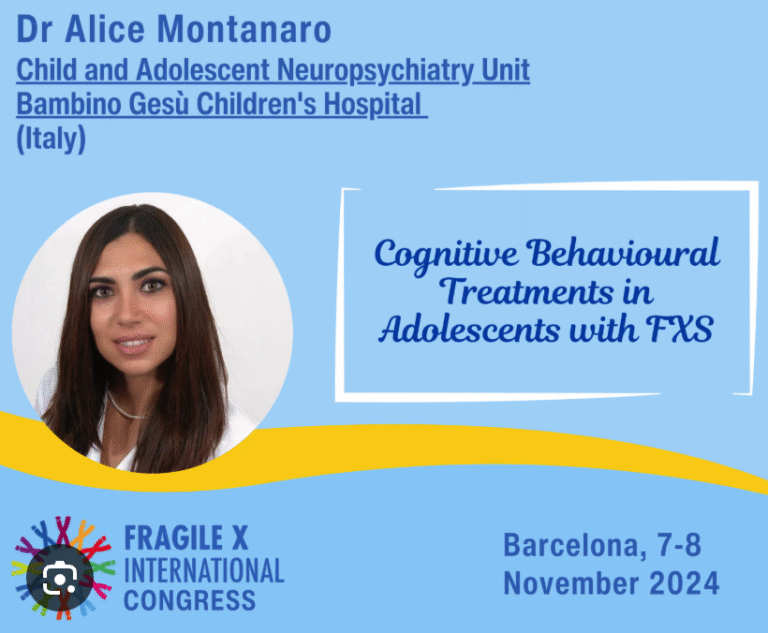
  • Dr. Alice Montanaro

    "Kai gyvenimas tampa reiklesnis": Neuropsichologinė kognityvinė elgesio terapija FXS sergantiems jauniems suaugusiesiems

  • Du berniukai su FXS

    Fragile X džiaugsmai - paskelbta knyga

Ši svetainė automatiškai išversta naudojant dirbtinį intelektą. Jei pastebėjote vertimo klaidą, prašome susisiekite su mumis.

Jūsų parama gali būti reikšminga.

Jei pageidaujate aukoti banko pavedimu, mūsų banko rekvizitai yra šie: Fragile X International aisbl
IBANAS: BE14 3631 4543 6483
BIC: BBRUBEBB

Paaukoti dabar

Fragile X International

Švęsti ir remti žmones, visame pasaulyje sergančius trapumo X sindromu ir su trapumo X premutacija susijusiomis ligomis.

  • Fragile X International aisbl - FraXI
  • Rue d'Egmont, 11 - 1000 Bruxelles - Belgija
  • [email protected]
  • RPM Bruxelles 0776.532.015
Visit Fragile X International on Facebook
Visit Fragile X International on LinkedIn
Visit Fragile X International on Instagram
Visit Fragile X International on TikTok
"Rare Diseases International" logotipas
Europos retųjų ligų logotipas

Prisijunkite prie mūsų adresatų sąrašo

Įveskite savo el. pašto adresą ir gaukite naujausius mūsų atnaujinimus. Bendrindami savo el. pašto adresą sutinkate su mūsų privatumo politika.

Privatumo politika | Svetainės struktūra