Latviešu valoda
Latviešu valoda English العربية Български বাংলা Čeština Dansk Deutsch Español فارسی Français Ελληνικά עִבְרִית हिन्दी Magyar Italiano 日本語 한국어 Lietuvių kalba Bahasa Melayu ਪੰਜਾਬੀ Română Русский Slovenčina Српски језик Shqip Svenska Українська Türkçe اردو 香港中文 Norsk bokmål සිංහල தமிழ்
Pāriet uz saturu
Fragile X International logotips
  • Par trauslo X
      Nosacījums
      • Trauslais X sindroms
      • Trauslā X sindroma stiprās puses
      • Trauslā X sindroma diagnosticēšana
      • Nemedicīniskā terapija trausla X sindroma gadījumā
      Persona
      • Palīdzība cilvēkam ar trauslo X sindromu
      • Meitenes ar trauslo X sindromu
      • Seksualitāte
      • Autonomija un piekrišana
      ģimene
      • Fragile X ģenētika
      • Ar trauslo X premutāciju saistītie stāvokļi 
      Papildu informācija
      • Kustību pārtraukuma aktivitātes
      • BIEŽĀK UZDOTIE JAUTĀJUMI
      • Trauslās X klīnikas pēc valsts
      • Resursi
  • Par mums
    • Ģimeņu apvienības pēc valsts
    • Ģimenes stāsti
    • Kļūsti par biedru
    • Direktoru padome
    • Padomdevēju padome
  • Jaunumi un notikumi
    • Jaunumi un atjauninājumi
    • Starptautiskā valūtas maiņas izpratnes diena
    • FraXI Dāvināšanas diena 2025
    • Fragile X starptautiskais kongress
    • 28. februāris ir reto slimību diena
  • Pētniecība
    • Mūsu pētījumi
    • Pētniecības jaunumi
    • Pētniecības iespējas
  • Atbalstiet mūs
    • Sniedziet
    • Sponsors
    • Līdzekļu vākšana
  • Sazinieties ar
Ziedot
Fragile X International logotips
  • Par trauslo X
    • Trauslais X sindroms
    • Trauslā X sindroma stiprās puses
    • Trauslā X sindroma diagnosticēšana
    • Nemedicīniskā terapija trausla X sindroma gadījumā
    • Palīdzība cilvēkam ar trauslo X sindromu
    • Meitenes ar trauslo X sindromu
    • Seksualitāte
    • Autonomija un piekrišana
    • Fragile X ģenētika
    • Ar trauslo X premutāciju saistītie stāvokļi 
    • Kustību pārtraukuma aktivitātes
    • BIEŽĀK UZDOTIE JAUTĀJUMI
    • Trauslās X klīnikas pēc valsts
    • Resursi
  • Par mums
    • Ģimenes apvienības
    • Ģimenes stāsti
    • Kļūsti par biedru
    • Direktoru padome
    • Padomdevēju padome
  • Jaunumi un notikumi
    • Jaunumi un atjauninājumi
    • Starptautiskā valūtas maiņas izpratnes diena
    • FraXI Dāvināšanas diena 2025
    • Fragile X starptautiskais kongress
    • 28. februāris ir reto slimību diena
  • Pētniecība
    • Mūsu pētījumi
    • Pētniecības jaunumi
    • Pētniecības iespējas
  • Atbalstiet mūs
    • Sniedziet
    • Sponsors
    • Līdzekļu vākšana
  • Sazinieties ar
  • New Link
  • [email protected]
  • RPM Bruxelles 0776.532.015
  • Researchers dive deep into relationships between anxiety and Intolerance of Uncertainty in Fragile X Syndrome In a study supported by the Baily Thomas Charitable Fund, Cerebra and the Cornelia de Lange Syndrome Foundation UK and Ireland, a group of researchers has contrasted the relationship between anxiety and Intolerance of Uncertainty in Fragile X Syndrome (FXS) and Cornelia de Lange Syndrome (CdLS). You can read the full article by Smith et al here, but if you want a shorter version about the FXS-specific findings, please keep reading this blog. Approximately 30% of males with FXS meet the diagnostic criteria for a separate diagnosis of co-occurring autism. However, the subtle differences in the presentation and severity of autistic characteristics in people with FXS and CdLS compared with those with nonsyndromic autism is under-studied. For example, boys with FXS are less likely to display differences in social reciprocity (e.g., social smiling) compared with autistic boys of the same age. This suggests that, despite similarities in characteristics, nuanced differences in autism presentation may make it challenging to differentiate autism from the inherent behavioural phenotype of rare genetic syndromes, yet it also affords the opportunity to examine the relationship between profiles of autistic characteristics and anxiety. What is the Intolerance of Uncertainty? The Intolerance of Uncertainty may explain the relationship between autism and anxiety in FXS. It is characterised by distress or difficulty functioning during uncertain or unpredictable situations, a strong preference for predictability, and cognitive or behavioural paralysis or inhibition. It has been identified as an important risk factor for the development and maintenance of anxiety in the general population and has been implicated as a critical factor underpinning anxiety. Understanding the relationship between the Intolerance of Uncertainty and anxiety in FXS is important for the development of tailored interventions to reduce anxiety in rare genetic syndromes associated with intellectual disability. Findings of the study The results from the study suggest that the relationship between autistic characteristics, anxiety and levels of Intolerance of Uncertainty (IU) differs for people with CdLS and males with FXS. While the CdLS and FXS groups did not differ in autistic characteristics, anxiety symptom severity or levels of IU, levels of IU fully mediated the relationship between autism characteristics and anxiety symptom severity for the CdLS group, but not for the FXS group. This means that when compared to the effects of IU in those with FXS, participants with CdLS showed greater levels of IU impact in the relationship between autism and anxiety.These findings improve our understanding of the autism–anxiety relationship and can inform future research directions, as well as potential new interventions and theoretical frameworks, improving quality of life for individuals with rare genetic syndromes and their families.

    Researchers dive deep into relationships between anxiety and Intolerance of Uncertainty in Fragile X Syndrome 

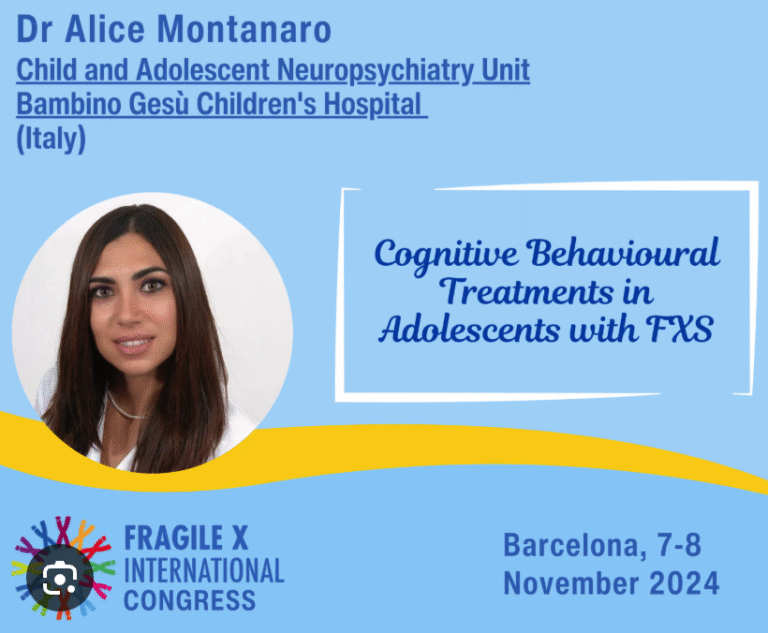
  • Dr. Alise Montanaro

    "Kad dzīve kļūst prasīgāka": Neiropsiholoģiski-kognitīvi uzvedības terapija jauniešiem ar FXS, kas dzīvo ar FXS, - mūžizglītības, daudzpusīgi integrēta pieeja

  • Divi zēni ar FXS

    Fragile X prieki - ir publicēta grāmata

Šī vietne tiek automātiski tulkota, izmantojot mākslīgo intelektu. Ja pamanāt tulkojuma kļūdu, lūdzu sazinieties ar mums.

Jūsu atbalsts var kaut ko mainīt.

Ja vēlaties ziedot ar bankas pārskaitījumu, mūsu bankas rekvizīti ir šādi: Fragile X International aisbl
IBAN: BE14 3631 4543 6483
BIC: BBRUBEBB

Ziedot tagad

Fragile X International

Svinot un atbalstot cilvēkus, kas visā pasaulē dzīvo ar trauslo X sindromu un ar trauslo X premutāciju saistītām slimībām.

  • Fragile X International - FraXI
  • Rue d'Egmont, 11 - 1000 Bruxelles - Beļģija
  • [email protected]
  • RPM Bruxelles 0776.532.015
Visit Fragile X International on Facebook
Visit Fragile X International on LinkedIn
Visit Fragile X International on Instagram
Visit Fragile X International on TikTok
Rare Diseases International logo
Rare Diseases Europe logo

Pievienojieties mūsu adresātu sarakstam

Ievadiet savu e-pasta adresi un saņemiet jaunākos atjauninājumus no mums. Kopīgojot savu e-pasta adresi, jūs piekrītat mūsu privātuma politika.

Konfidencialitātes politika | Lapas karte