
- Haberler
In Conversation with Dr Marcia Braden
Published: 10 May 2026
Dr Marcia Braden is a psychologist with over four years of experience supporting families and people living with Fragile X Syndrome. She has also been a pivotal member of FraXI’s Board of Advisors, and was influential in founding FraXI’s clinical arm which unites researchers and medical practitioners in supporting the Fragile X Community in everyday life. From June to October, Marcia will be hosting a webinar workshop series titled “Understanding Fragile X Syndrome with Dr Marcia Braden”. The event will be open only to FraXI’s full members and run for approximately one hour on four selected dates in June, August, September and October. Members are encouraged to send in their questions before they attend the webinars to ensure maximum inclusion in the question and answer session which will follow Marcia’s talk.
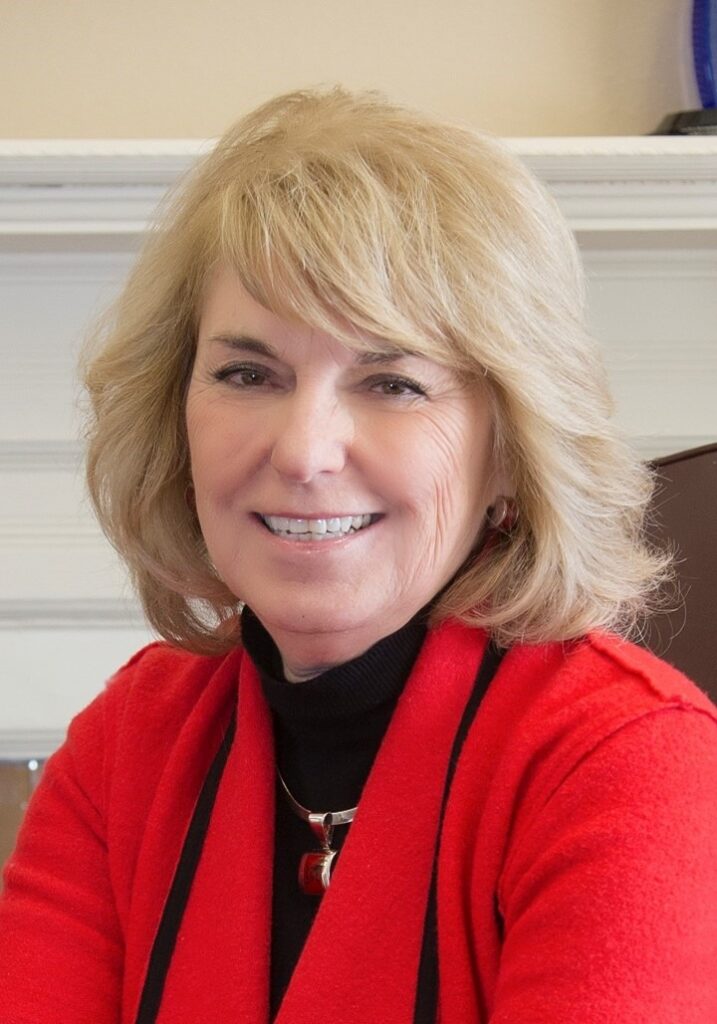
Part of the many joys of organising these webinars is being able to sit down with Marcia and talk to her about her life and her vision for the future of FXS. She takes us through how she started her lifelong dedication to people living with FXS, her connection to FraXI, and what she hopes members will take away from her upcoming webinars.
Marcia the clinical psychologist and Marcia the human being are exactly the same person. This is a very important truth to know about her, whether you are coming to her for advice on FXS or if you want to talk to her about life in general. She approaches everything with hope, and her lifelong mission is to instill the same in everyone who has an association with FXS.
Her involvement with FXS clinical practice began as a career switch from being a teacher of general education to specialising in the needs of children with intellectual disabilities. In her early days as a teacher, Marcia could not get her classroom’s “lower” group off her mind. Not just because they were advancing at a slower pace than the other levels, but because she wanted to find out how to support them in a way that was tailored to their needs. Marcia began to learn how to better support these students, leading to her being taught how to administer an instrument to elevate education for children with autism, and her ‘toolbox’ eventually found its way to Prof Randi J Hagerman, a pioneer in FXS research and a member of FraXI’s Board of Advisors.The two women connected immediately over their shared goals, and Marcia found herself using the results of her instrument to benefit children with FXS. “Randi passed on her lifetime passion to me,” remembers Marcia. “And I have not looked back since.”
Marcia’s invitation to the world of FXS led to many new avenues. She even met her husband through a person carrying the premutation gene! “I think the most precious gift I have been given since being welcomed into this world is that of kindness and understanding,” says Marcia. “When I work with patients with FXS, I take a lot of time to understand what works for them and what does not. I find that being open to understanding allows us to dig deeper. People living with FXS are very good judges of kindness- if you carry yourself with kindness they will immediately recognise you as someone they can trust. I think they generate an abundance of kindness in me.”
Marcia’s philosophy is all about maximising the strengths of people living with FXS. Part of her job is to support her patients in working on areas they want to improve, but she utilises their existing strengths as a tool to foster new skills and reduce negative feelings such as anxiety and depression.
When a friend introduced her to FraXI, she could not say no to the opportunity to share this approach by establishing a clinical arm in the organisation. “A clinical arm is important to an organisation like FraXI because there is a translational gap between research and clinical practice. A clinician is needed to help with translating data we find through research into everyday life through families and individuals living with FXS. We must work together to make sure important findings in research do not get lost in intimidating medical words- clinicians can be very good at taking the findings and delivering them to families who are meant to be the main beneficiaries of these findings in a helpful, holistic and human way. We are on the same team.”
Marcia was inspired to collaborate with FraXI on the upcoming webinar workshop series after meeting the Madias, whose story we have covered. “They moved me to the point of teaching me,” she says. “They speak French. I speak English. We had Kristin (Mulcock) as an interpreter. The language of understanding knows no borders. I was reminded again why I am here- I want to use the tools and knowledge I have to support families like the Madias who live with enough hope to outnumber the challenges they face. They are incredible.”
Marcia says she sees her message of hope echoed in FraXI’s research. Paying homage to our Joys of Fragile X Kağıt, she says that one of the most essential skills every stakeholder in FXS advocacy should have is the capacity to listen.
“What people with FXS have in common is a gene mutation, but that does not mean that they are affected in the same way. They are unique. Medical schools need to rework their curricula to reflect this, otherwise we are going to be left with unhelpful carbon copies of a single strategy.”
Over the course of four decades, Marcia has adopted countless new methods to support patients living with FXS to learn new things. “If they want to learn something new, I always say that we are going to do it together. I watch them overcome things that others easily label deficits. With Fragile X, you really need to observe and make a list of things that they like and feel comfortable introducing to their personal space.” Marcia put adaptivity at the centre of all her techniques. But if you really think about it, adaptivity should not just be limited to therapeutic strategies but to everyday human exchanges.
“If someone with Fragile X is having a hard time with behaviour, the key to overcoming the challenge is patience. This is something that I work on with them quite often. My message to others is that people with FXS do not want to have difficulties with behaviour. We have to understand that they live with a condition that gives them a lot more hurdles to jump over than the rest of us do. The most useful thing you can do when someone with FXS is behaving in a way that is causing harm to themselves is to work on how to stop that behaviour, but not before taking the time to understand why they are engaging in self-harming behaviours and how the environment around them should be changed to help them walk away from such self-destructive behaviour.”
Perhaps, the real harm is not in the behaviours exhibited by some people with FXS but by making them feel shortchanged. “We can’t shy away from certain things about the behaviour of people living with FXS because it is unusual to us. We can be better allies by observing and trying to understand.”
As Marcia prepares for her workshop webinars, we would like to leave our members with the following from her:
“You may think you are moving a little slower than others, but what is important is that you are moving nonetheless. When you are on a spectrum, what is important to ask rather than where you are on the spectrum, is who you are to yourself and those who love you. I am grateful to FraXI for allowing me to sing my song to more people all over the world. I cannot wait to see what my footprint will look like if it can make it across the globe.”

