
- Nyheter
- |
- Forskning
Sequence of neuropsychiatric symptoms for fragile X-associated tremor/ataxia syndrome (FXTAS) is different in females compared to males, new study finds
Published: 10 apr 2026
Written by Douglas Ezra Morrison, Matthew Dominic Ponzini, Ellery R Santos, Hazel Maridith Barlahan Biag, Glenda Espinal, Flora Tassone, Susan M Rivera, David Hessl, Andrea Schneider, James A Bourgeois, Randi Hagerman and Kyoungmi Kim, please click här for the full article.
Graphical Abstract of the study as it appears in the publication
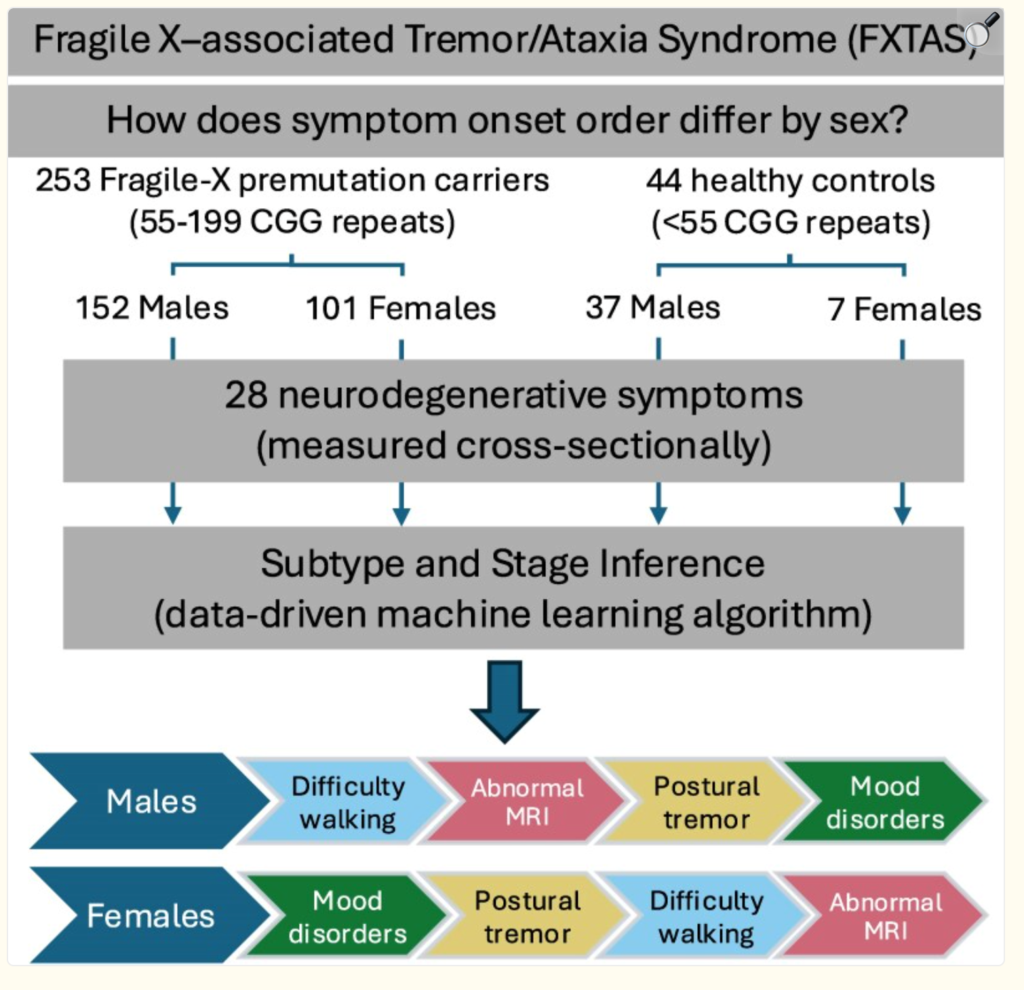
Previous research into Fragile X-associated tremor/ataxia syndrome (FXTAS) has found that there are sex-based differences in the way which it affects fragile X gene premutation carriers. Recognised symptoms in both males and females generally include tremors, balance issues and dementia. The condition is onset disorder, typically occurring in premutation carriers over the age of 60, with symptoms usually being noticeable in their fifties.
But the type and severity of FXTAS symptoms take different forms depending on the patient. Some have shown multiple symptoms which become severe as they advance in age, while others have fewer and milder symptoms. There are very few studies which analyse the sequence in which these symptoms appear. The authors argue that it is important to focus future studies on how these sequences differ from patient to patient in order to understand how to better address three key questions.
(i) In what sequential order do FXTAS symptoms and brain changes typically appear?
(ii) How does that sequence vary between males and females?
(iii) Do specific baseline characteristics predict the order of presentation?
The authors found substantial differences in sequential order of eventual symptoms between males and females and in combination of sex and CGG repeat size, suggesting that there is a substantial variation across premutation carriers in the sequence of emergence of symptoms associated with FXTAS.
A noteworthy finding in the study is prevalence of psychiatric illnesses that occur earlier in females and often before the onset of tremor and ataxia compared to males. It was found that symptoms such as mood disorders can often occur even before the diagnosis of FXTAS in females, and the stress accompanying mood disorders may be a precipitating feature for the onset of FXTAS. This suggests that the diagnostic criteria for FXTAS may need to be altered in females compared to males, particularly for early cases.

