
Helping a person with Fragile X Syndrome (FXS) is about recognising and promoting their strengths as well as putting support in place for areas of difficulties. There will be a range of inter-linked aspects which cross categories. Socio-educational interventions, for example, may teach skills for daily living, give tools for independence and promote inclusion in society. It is important to be consistent in all areas of life: for example what is taught by a teacher or suggested by a psychologist can be applied outside of school or therapy sessions, embedding these approaches in all parts of a person’s life.

- At Home
- Communication
- Continence
- Money
- At School
- Extra-curricular Activities
- Transitioning into Adulthood
- Independent Living
- Relationships
- FXS and Ageing
- Telling Others About FXS
At Home
Routine
People with FXS often thrive on routine, and this is something that can be helpful in the home. For those who can tell the time, knowing what time key activities happen (like waking up, meal times and bed time) can help them feel in control of their surroundings and minimise uncertainty. Explaining things using simple language, short sentences, and repetition can help people with FXS to understand what is being communicated to them. Additionally, the use of pictures and social stories can help them match what is being said to them with something they can see to understand.
People with FXS are helpful in nature. Getting them involved in helping around the house and family routines can be part of them feeling accomplished and involved in family life.
If the routine needs to change, preparation is necessary. Ideally, plan the routine change in smaller steps, so that the change is gradual. Prepare your loved one for the change by talking about it in advance and getting them used to the idea. Ask for advice on how to manage routine changes if you are unsure. Often another parent might have ideas, a teacher might be able to assist, or an occupational therapist can help. The important thing is to recognise that forming new routines needs to be managed and that your loved one may need help in letting go of the old routine and getting used to a new routine.
Looking after yourself
The family dynamic is important — happy parents can help children to be settled and happy. One of the most important things for parents of children with additional needs is to take time for themselves.
Taking time for yourself can help to avoid burnout and improve relationships by allowing space to do something entirely for you. It is not selfish to take time for yourself. Take a walk, spend time with a friend, do something you enjoy. Play an instrument, sing in a choir, engage with a sport, pursue a hobby, go dancing.
It is important to “help the helper” and “care for the carer”. You are at risk of giving your energy 24/7 and becoming burnt out. Make sure to rest and have time off. If you look after yourself, you can best look after your loved one. Make sure your other family members and any siblings also have time to rest and enjoy time to themselves. There is sibling support available in some countries, such as Sibs.
Please see the Mentally Healthy Toolkit from EURORDIS for some self-help tools and other links for promoting wellbeing.
Making time for therapies
Therapies initiated by professionals are there to help. Being consistent with the therapies in all areas, including home and school, can help make these practices become part of a routine and therefore easier to maintain. Engaging with therapies benefits children with FXS in the long term, for example, speech and language therapy, which will help children to communicate their wants and needs. Behavioural therapies and sensory diets can have a real impact over time. Additionally, more information is available on occupational therapy at home.
In households with multiple children it can sometimes be difficult to manage the needs of each child as an individual. Where multiple children have FXS, finding a balance between the needs of each child (that is, where children have different needs) can be a challenge. Please do seek support from family, friends and professionals. You are not alone.
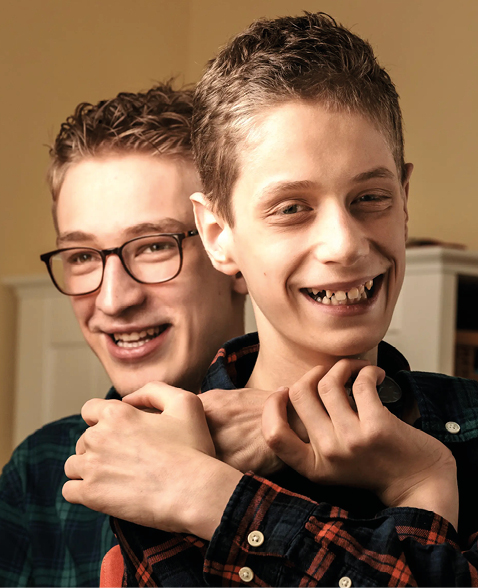
Siblings
Equally in households where not all children have FXS sometimes those without FXS can find it difficult to manage their siblings requiring more help. A way of mitigating this is to ensure that one-on-one time for each child is available. Additionally explaining FXS and how it affects their sibling(s) can help their understanding.
There are various charities which support siblings. One in the UK is Sibs.
Sleep
Sleep disturbances are common in FXS. People with FXS may find it difficult to go to sleep, wake up in the night, wake up early or have other difficulties with sleep but there are techniques you can use to try to help them.
Firstly, set a bedtime routine that occurs every night, at the same time and in the same order. Try to build in some calm time before sleep, for example: a quiet bath, a story, soft music or rhythmic repetitive movements.
Secondly, ensure there is a good sleep environment: consider keeping the bedroom dark, making the bed comfortable and avoiding distractions.
Finally, a reward system can be used to encourage good sleep and desired sleep behaviours: for example, rewarding staying in their own bed all night. Choose a reward that will motivate your loved one, for example: an outing or stickers.
Cerebra have a booklet available on sleep tips and techniques for families who have a child with a brain condition.
Communication
FXS can affect speech, language and communication. Communication abilities will vary but people with FXS may have difficulties understanding what others are communicating to them or expressing themselves to other people. Social anxiety and autism may underpin some of these difficulties.
If communication is an area of concern, a speech and language therapist can assess and advise. However, there are also strategies you can implement while waiting for specialised support. Firstly, you may need to get your loved one’s attention, so that they realise you are communicating with them, for example, saying their name or waving.
Give them time to process what is being said and be patient. Using shorter phrases may be helpful: give one piece of information at a time and make it as clear as you can. Try to reduce distractions: people with FXS may not be able to tune out other noises to focus on you when there are lots of people around.
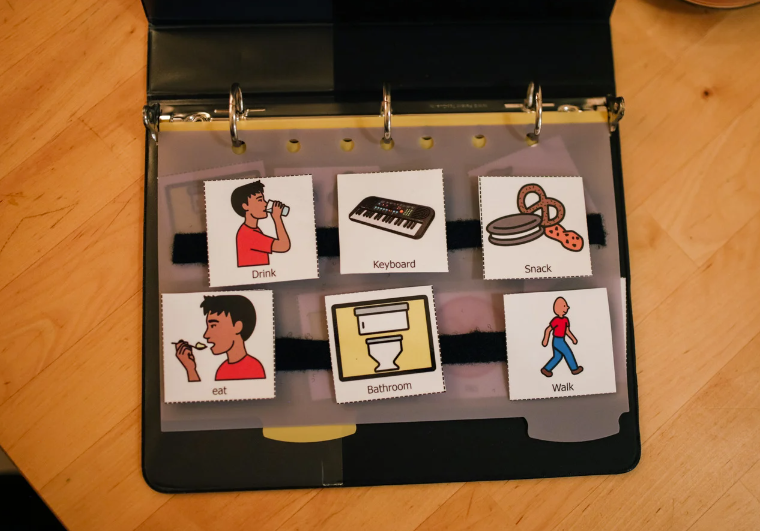
In times when your loved one is overwhelmed or finding it difficult to express themselves, you can try using visual aids. For example, they can point to what emotion they are feeling, or draw out what they want. One tool to consider using is Metacom Symbols, METACOM is a professionally designed symbol system especially developed for Augmentative and Alternative Communication (AAC). The free downloads give an idea of the way social or visual stories can help in communication. There may be other tools available in your country, for example as devices or apps. Look for AAC communication devices, for example, Talker Buddy, which aim to help with non-verbal communication.
Анксиозност may be a barrier or exacerbate communication difficulties. Signs that a person with FXS may be anxious include crying, shaking, restlessness, irritability or fatigue. Identify calming strategies, such as removing them from the situation if possible, using sensory toys, listening to calming music or holding their comfort item(s). Please also see suggested Активности у паузи за кретање for suggested activities.
Cerebra have a resource on Communication with Children with Severe or Profound Intellectual Disabilities.
Continence
Some people with FXS struggle with continence (particularly boys). If you are concerned there may be a medical problem causing toileting delay, make an appointment with a healthcare professional.
Your loved one may struggle with the behavioural or sensory side of toileting. Behavioural struggles could be: resistance to instruction, lack of confidence or reduced social understanding. To help with toilet training, you may wish to implement a rewards strategy. Choose something your loved one will value and, ideally, something immediate, for example, popping bubble wrap.
Sensory struggles related to continence issues could be: the dislike of the sounds/smells associated with toileting, the inability to recognise sensations for needing to go to the toilet or being easily distracted. For people who struggle to recognise the sensation of a full bladder, body worn wetting devices are available which beep when the first drops of urine come into contact with the underwear.
More information is available on toilet training.
Money
Often people with FXS will want to have money, and perhaps even a bank account, but parents and carers may have concerns. Those with FXS may struggle to understand the meaning of numbers and so not appreciate how much something costs, or spend all their money at once. Some may be more vulnerable to financial exploitation and others so kind-hearted that they want to give all their money to others in need. Nevertheless, if the person with FXS is keen to use money it can promote independence where this is possible.
There are different ways parents and guardians may handle this. One way is to rely on cash and give those with FXS a small amount of cash on a regular basis so they are unlikely to lose a large amount of money. It can be difficult to find a suitable bank account, and care needs to be taken so that a person with FXS does not incur high bank charges without understanding. Some banks will allow accounts with cards, but which cannot be overdrawn or only overdrawn to a small sum, which might be suitable. Some banks offer cards onto which money can be put and only that money can be spent. Bank providers may be able to advise on what kind of account would be suitable. Some organisations offer courses to help people with intellectual disabilities manage money which bay be helpful.
At School
More information is available on the use of occupational therapy at school.
As a parent
Communicating with your child’s teacher/school is usually the first step in supporting them. Explaining how your child responds to their surroundings, their likes and dislikes and their usual routines can help your child feel settled when starting school. Setting up a meeting between teachers and your child can help your child develop a sense of familiarity and help teachers get to know your child in a less formal setting.
You may wish to create an ‘About Me’ document, which tells educators about your child. This can list what they like, what they don’t like, how it is best to communicate with them, any strategies on sensory issues and tips on how they best learn. The benefit to this is that it can be made available to anyone who will come into contact with your child to minimise the risk of miscommunication. Health professionals and educational therapists are a good starting point for identifying what is likely to benefit individual needs. For example, movement break activities for children who are hyperactive and/or sensory breaks for children who are easily overwhelmed.
Children with Fragile X Syndrome (FXS) may need support in socialising with their peers. They are often very socially motivated (particularly boys), but may struggle with communication. Girls with FXS are often more shy and socially anxious than their peers. Children with FXS tend to learn by imitating and following the cues of those around them. Pairing children up with a peer can help to maintain a sense of familiarity and consistency from day to day, and help a child feel more relaxed. Pairing also helps with learning communication skills from mirroring those shown to them.
As FXS is a spectrum, each child will learn differently. Using a range of teaching and learning methods which encompass different approaches (for example, visual, audio, tactile) will help to determine how a child learns best, and allow for multiple channels of communication.
As each child will learn and communicate differently it is impossible to create a one-size-fits-all guide to helping someone with FXS. However, treating them with kindness, compassion, and patience will help the child feel secure and allow them the space to express themselves. Some children with FXS will be able to go on to further education, while others will struggle with many aspects of learning. Determining your child’s strengths and building on them is important.
As an educator
If a students is identified as having Fragile X Syndrome (and potentially other diagnoses alongside, such as ADHD or autism) you will likely receive specific details or recommended strategies and interventions that the student requires. It is important to listen to these and try to implement them where possible. Take time to talk to the student and/or parents and professionals to understand their specific needs. Starting with a good understanding will help you build a strong, open relationship with your student.
There are general strategies that can be useful to implement for any child with Fragile X Syndrome:
One thing that may help is frequent breaks. Breaks can help accommodate attention deficits and allow the child to ‘reset’ after having to concentrate for a long period of time. Sometimes they may not be needed but anticipating they may be required and incorporating them into lesson plans will help you achieve the goals for the session.
Verbal communication can often be difficult for those with FXS. Offering alternative modes of communication for example drawing or visual representations may help you understand what the child needs.
Integrating sensory activities into the day can help calm children with FXS. Examples could include heavy work for example cleaning windows, moving stacks of books or chairs — this also satisfies the child as they fulfil their desire to be helpful. Alternatively including physical activities also helps regulate their nervous system for example going for a walk, going on the swings, doing star jumps. More suggestions can be found in ‘Активности у паузи за кретање‘
Nearly all boys and ⅓ of girls with FXS have a learning disability. More information on this is covered in the section on ‘Behaviour and Therapies’.
Although accommodating for your students additional needs is crucial, it’s also important not to single them out. Some students may feel uncomfortable or embarrassed if they are treated noticeably differently to their peers, and this can exacerbate social anxiety. Discuss with the student how they would prefer to address this, resources can be used to help, including using discrete methods such as a code word or a card to show they need help.
Extra-curricular Activities
Extra-curricular activities are a great way for people with Fragile X Syndrome (FXS) to socialise in a less formal environment than educational settings. For those who are more active, groups such as Scouting (or your country’s equivalent) are a practical way for them to socialise while engaging in activities, which will be stimulating for both their brain and body. For people who prefer a quieter pace, arts and craft groups are a good way for them to develop fine motor skills while socialising. Additionally, sports are a good way to keep active and develop both gross and fine motor skills.
Similar to the information above on ‘at school’, communicate with those who are leading the groups about your loved one and their needs. This will help leaders include and engage the person with FXS in the best way possible. Try different activities to see which appeal to the person with FXS — just like you, they will have likes and dislikes in regard to activities.
Keep in mind the sensory profile of the person with FXS — if they love the feel of water and splashing, then swimming and hydrotherapy may be enjoyable activities. If they have a lot of energy and are always in motion, then a physical activity such as hiking might be enjoyable. Explore their strengths and passions, and build on those. They may want to try a range of activities before they find something for them.

Transitioning into Adulthood
Transitioning into adulthood can be challenging for individuals with Fragile X Syndrome (FXS), however there are ways in which disruption can be minimised. Planning ahead is helpful, as managing change for someone with FXS needs to happen over time and not all at once.
Social care
Social services available to you in your local area are a good starting place for accessing help for your loved one transitioning into adulthood. In some countries parents can be granted extended guardianship for their children beyond the age of legal adulthood. This is not suitable for every individual with FXS, however for those who are unlikely to be able to live independently it may be a good option.
Medical care
Many countries provide annual health check ups to people with genetic syndromes or learning disabilities. These are important for ongoing health monitoring and assessing whether any medical interventions are needed.
Jobs
People with FXS are often very honest and hard working, making them a good addition to work places. Not everyone with FXS will be able to work, but for those who can it can be very rewarding. In addition to this, it can help them develop life skills and independence. Alternatively, for those who would benefit from the experience but may not have the skills to hold down a job, volunteering can allow them to achieve tasks and develop skills in an environment which is less demanding.
Independent Living
All transition meetings and decisions should involve the young person as much as possible — this is called ‘person centred planning’. If you believe your young person will require (or continue to require) specific services, ensure these continue into adulthood, as some will not apply to adults or require re-assessment. Whether their goal is a particular career or gaining independence, it is important their transition into adulthood reflects this.
Living arrangements
Some people with FXS will be able to live independently, while others may need frequent care or supported living. This will depend on the individual and their strengths. There are also cultural factors. In some countries, multi-generational living is the usual situation. In other countries, people with high needs move into social housing paid for by the government. There are a range of options, depending on your country and circumstances. Coming up with living arrangements which will align with the wishes of the person living with FXS will help to lead to them having a happy, fulfilling life.
Occupational therapists or other health professionals will be able to help identify areas in which your loved one needs support and what level of care is appropriate. There is a section available on ‘Occupational Therapy‘.
Independence levels
Independence levels can vary drastically in those with FXS. Some will be able to live completely independently whereas others may need lifelong support in the home. Encouraging independence from a young age is important — set small goals and work through them slowly and their independence will grow.
Combatting isolation
It is important to maintain an active lifestyle when living independently. Regular activities combat isolation and give a pattern to the day. A job or volunteering can help with integration into society. There will be various groups your loved one can join — it is worth looking at groups for those with autism, intellectual disability and other syndromes, for outings and activities. It is good to encourage hobbies, for example, gardening or caring for animals on a farm.
Staying healthy
Regular exercise is important for maintaining a healthy body weight. For example, this can be in the home with an exercise bike or outdoors taking a walk. There may be a local Special Olympics club or other inclusive sport activities, such as the Inclusive Football which is run in Spain. Regular exercise can also be social, encouraging interaction with others.
A healthy diet is important for those with FXS (and for all of us!). Your loved one may not understand the importance of a balanced diet. You can use pictures (e.g. of a nutritionally balanced plate of food or different food groups) to help them visualise a ‘healthy diet’. Involving your loved one in food preparation is a great activity as it can provide sensory stimulation whilst fulfilling their desire to be helpful. For example, let them cut vegetables, weigh out ingredients or stir. If your child enjoys snacking, create a drawer or box of snacks which are healthy rather than them reaching for unhealthy snacks. Healthy options include fruit and vegetables, oatcakes, yoghurt, nuts and rice cakes.
Services
Some local services have ‘transition workers’ who can help to guide the transition into adulthood, however they are often in high demand and may not always be available. Here are some tips to develop your own transition strategy provided by Cerebra UK:
- Have a goal: you may have a statement of needs for the young person which will need to continue into adulthood, depending on the services and paperwork required in your country.
- Look at different options: think about what your loved one wants and is capable of achieving. Look at which of their goals require planning.
- Organisation: you will be the ‘manager’ of your own team. Make a file or document to keep records and remind experts what needs to be done and by when.
- Gather information: look at services available from local authorities or your loved ones work place or university.
Please see further information from Cerebra on Transition to Adulthood in England.
Relationships
Relationships can help your loved one thrive. They can make them feel loved, boost self-esteem and confidence but they also involve risks such as being hurt, becoming pregnant or sexually transmitted infections (STIs). In terms of relationships, during early school years you may want to focus on what healthy behaviours are in a relationship (including friendship) and how they can manage unacceptable or unkind behaviours. During later school years you may want to cover communicating online, personal space, consent, and public vs private behaviour. Please see the ‘Сексуалност‘ section for information on intimate relationships.
Relationships can be tricky. Signs of a good relationship include mutual respect, trust, good communication, kindness and enjoyment. Good relationships should be modelled as those with FXS often learn by example. Modelling good relationships, and explaining how actions can affect others, is helpful. People with FXS often like to please, and can be especially vulnerable in relationships, for example, being bullied by those who they wish to have as friends. Encourage healthy relationships, but please be aware of issues around being manipulated and sexual exploitation.
People with FXS are often very social and wish to connect. There may be psychologists in your area who can support the FXS young person in learning about relationships, or groups for those with FXS or intellectual disabilities that may offer further resources.
Додатне информације
Easy read guidance on relationships and friendships
Talk Relationships (teaching about relationships and example lesson plans)
FXS and Ageing
Continuing to care for and support an older person with Fragile X Syndrome (FXS) is important for ensuring their quality of life. As people get older their support systems may change around them. No two people are the same, they will have different needs and aspirations.
Adults
Once a person has the support systems in place following their transition to adulthood it is important to keep on top of all their aspects of care, including physical health, emotional health and social wellbeing. Unsupported adults are at risk of decline and can sometimes slip through the cracks when accessing support. For adults with FXS living independently it is important to ensure their living arrangements are safe and their needs are being met both in the house and in the wider community. Ensuring that those with FXS maintain regular contact with their support systems will help.
Older People
As people with FXS age into the later stages of life their needs and community may change. If they are living with family, circumstances may change such as who is in the house and the level of care relatives can provide. Reassessing support systems as things change is important to ensure the person with FXS is provided for. If living with family becomes unmanageable other forms of care and living arrangements may be more suitable. It is important to try to put systems in place before they are necessary to make sure everyone involved is clued in to what has been arranged. Social services, or your country’s equivalent, will be able to help put plans in place should care provision changes.
Explaining Fragile X Syndrome to others
Explaining Fragile X Syndrome (FXS) can be difficult as it is a rare condition and involves a knowledge of genetics to understand and explain. Remember that having FXS is not anyone’s fault. Please do not feel guilty. It might be helpful to seek psychological help for yourself in managing your feelings and how your family may process this information. Loving your child and encouraging others to do the same is important.
Key points to get across:
- FXS is an inherited genetic condition (it is within the DNA). It is not contagious.
- There is a normal life expectancy for people with FXS.
- FXS can cause a range of physical differences, behavioural issues and other health problems (for example, epilepsy).
- There is no cure for FXS but there are therapies, interventions and medications that can help symptoms of FXS.
- People with FXS can live full and happy lives.
- There are positives! People with FXS often have good long-term visual and verbal memory, a good sense of humour and great imitation skills. Please see our section on the strengths of FXS.
- Challenges people with FXS may face include anxiety, hyperactive behaviour, limited eye contact, shyness, sensory sensitivities, communication difficulties and struggles with maths.
- Each person is unique. It is important to get to know the individual and understand who they are. Knowing a person with FXS is a gift —you will learn, change and grow through your friendship/relationship with someone who has FXS.

